The best time to visit the monarch butterflies in Mexico
The monarchs spend roughly five months in the fir forests of Michoacán and the State of Mexico, and no two stretches of that winter look alike. Pick the wrong week and you find thin clusters or crowded trails; pick the wrong hour and the butterflies sit still. Below, the weeks that usually work best, then the hours and days that make the difference.
The winter at a glance
The table gives the usual pattern from first arrivals to the flight north. The butterflies keep no calendar, so read each line as a tendency, not a timetable.
| When | What you usually find | Crowds |
|---|---|---|
| Late October to mid November | First arrivals; colonies still forming and shifting on the slopes | Light |
| Late November to mid December | Clusters settle on the firs and grow week by week | Light on weekdays |
| Late December to February | Colonies usually at their fullest; big flights on warm, sunny afternoons | Heavy over the holidays and on weekends |
| March | Mating, then the colonies thin out as monarchs leave for the north | Falling |
| April to October | No colonies to visit | None |
The sanctuaries usually open to visitors around November and close around the end of March. Opening days can shift from one winter to the next, so check with the operator if your trip falls at either edge of the season.
Late October and November, the arrivals
The first monarchs usually reach the oyamel forests around late October, after a flight of up to about 4,000 km (2,500 miles). Our guide to the migration follows that journey down from Canada and the United States.
Their arrival lines up roughly with the Day of the Dead on November 1 and 2. In parts of Michoacán the butterflies have long been tied to the souls of the dead coming home, an old link many people in the region still mention.
An early November visit can feel unfinished. The colonies are still forming and may move around the slope before settling, so the walk can run longer and the clusters thinner than in midwinter.
The reward is quiet trails and the first big gatherings of the winter. If you can only come in November, the second half is usually a safer bet than the first week.
Late December to February, the fullest weeks
From late December to February the colonies are usually at their densest. A single oyamel fir can carry thousands of butterflies, and the branches sag under clusters that turn the green trees a dull grayish brown.
Most visitors aim for these weeks, and so would we on a first trip. It is also the coldest part of the winter at about 3,000 m (around 10,000 ft), so early mornings at the colony can sit near 0 °C (32 °F).
Pack for that. Our page on dressing for the oyamel forest covers the layers, and the guide to the climb explains why the walk up feels harder than its length suggests.
A word on numbers. The colonies can hold millions of monarchs, but how many you see on a given day depends on the winter and, above all, on the weather.
March, mating and the flight north
As the days lengthen, the butterflies start to mate, on the forest floor and in the air. Through March the clusters break up, and more and more monarchs leave the mountains to lay their eggs on milkweed further north.
A March visit can be lively, with plenty of butterflies in the air on warm days, while the colonies shrink week by week. Late March is a gamble; some winters leave a good deal to see, in others the trees are close to bare.
Rain can start to turn the paths muddy toward the end of the season. Shoes with a firm grip and a light rain layer matter more then.
The hour counts as much as the month
Monarchs need warmth to fly. On a cold or cloudy morning they stay packed together on the branches with their wings closed, and a colony can look like clumps of dead leaves.
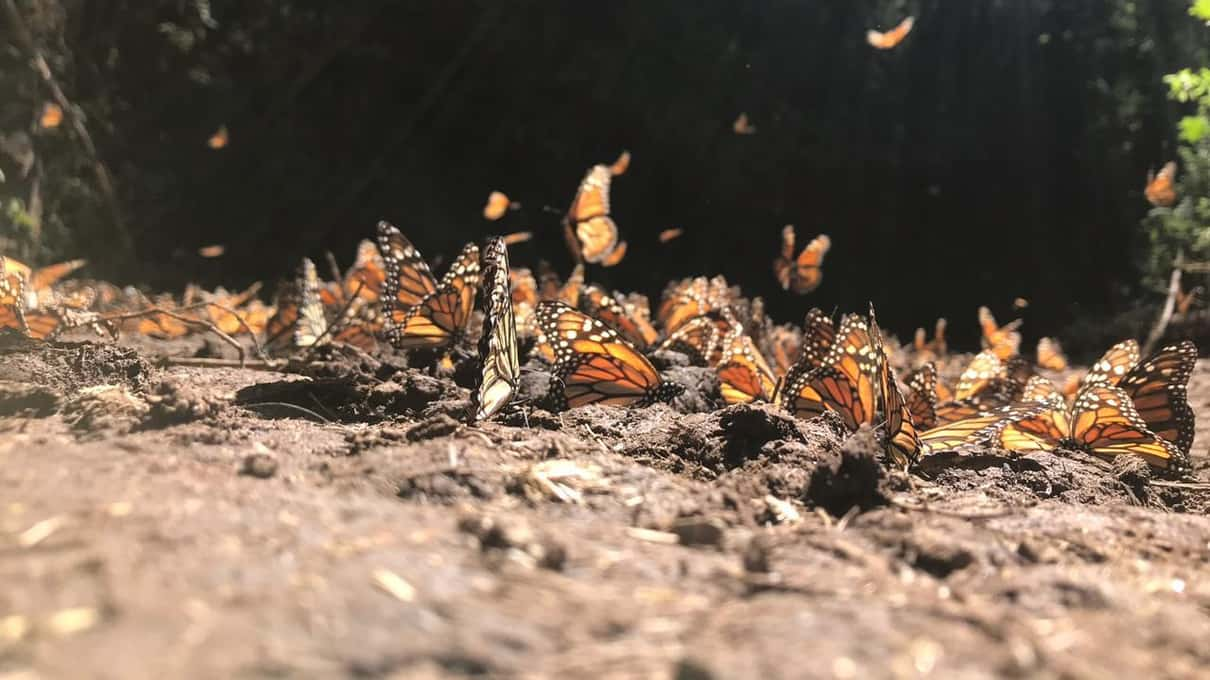
When the sun reaches the trees and the air warms, usually from about midday, they open their wings and take off. On a bright afternoon the air in the clearings can fill with orange as thousands go looking for water.
Cold mornings bring one more thing to watch. Many butterflies rest on the ground until they warm up, which is why our page on the sanctuary rules tells you to look where you step.
A gray, chilly day is the one thing no booking can fix. You still see the clusters, which are a sight on their own, just not the swirling flights in the photos.
Weekends, holidays and the crowds
The sanctuaries are a favorite outing for Mexican families, and weekends draw far bigger crowds than weekdays. The busiest stretch is usually the holiday period from Christmas to New Year, when the trails and the food stalls by the gate fill up.
If your dates allow, go on a weekday and start early. A quieter trail means less waiting at the entrance and more room to stand and watch once you reach the trees.
El Rosario is the busiest of the sanctuaries our tours visit. Our sanctuary comparison helps if you would trade the best-known name for a calmer path.
Dates and tours that hedge the weather
A single day trip gives you one roll of the weather dice. A longer stay near the forests gives you a second chance if day one turns out cold and cloudy.
EcoColors' seven-day trip from ~$2,295 is based in Valle de Bravo with six nights and breakfast, and it visits both Piedra Herrada and Capulín. One dull morning does not decide the whole trip.
The downside is the price and the week it takes, and the record is thin, 4.8 from 13 reviews on Viator and 4.4 from 4 on GetYourGuide. Our guide to longer stays near the sanctuaries covers doing the same on your own.
Several mornings in the forest, not one
EcoColors' week out of Valle de Bravo, with two sanctuaries, six nights with breakfast and a small group with a bilingual guide.
From Morelia, Yei Tours' private day from ~$200 chooses El Rosario or Sierra Chincua on the day, depending on the weather. The catch is that it sells only on Viator, and the per-person price is highest for a solo traveler.
Traveling with children in the busy weeks? Our questions about monarch tours with kids cover ages and the long day, and the price comparison lists every tour side by side.