What to wear in the monarch forests of Mexico
A day at the monarch sanctuaries can start in frost and end in strong sun, with a dusty or muddy climb in between. Getting dressed right is mostly about layers and good shoes. This guide covers both, plus the small things that belong in your daypack.
Cold at dawn, warm by midday
The colonies sit at about 3,000 m (around 10,000 ft), and in midwinter the early mornings there can hover near freezing, around 0 °C (32 °F). Most tours reach the sanctuary gate in the morning, so you start the walk in the cold.
By late morning the high sun can make the same slope feel warm, and the climb heats you up further. Then, back in the shade of the firs, you cool down fast while you stand watching the clusters.
That swing is why one heavy coat is the wrong answer. Several thin layers that you can add or peel off work far better, and they pack into a small bag.
The cold is also why the butterflies are there at all. The cool fir forest lets them slow down and save energy through the winter, as our page on the monarch migration explains. On the coldest mornings they stay clustered and still until the sun warms the slope.
So a chilly start is normal, and it rarely spoils the day. Dress for it, keep moving on the climb, and let the late-morning sun do the rest.
Layers that work on the trail
Think of three layers, each with its own job. You will probably wear all of them in the van at dawn and only the first one on the way up.
- A base layer of thermal fabric or merino wool that dries quickly when you sweat
- A fleece or warm sweater for the cold start and the time standing at the colony
- A light down jacket or a windproof shell on top
- Long trousers that you can move in, since the path is steep and dusty
- A warm hat or headband and thin gloves for the early part of the morning
Avoid cotton next to the skin. It holds sweat from the climb and turns cold the moment you stop. Our guide to the climb explains how steep the walk gets.
Shoes with grip
Footwear matters more than anything else on this list. The trails mix long runs of steps with packed earth, and in the dry months the surface turns to loose dust that behaves almost like sand.
Later in the winter, rain can turn the same tracks to mud. Trail shoes or light hiking boots with a deep tread are ideal. Smooth city sneakers and sandals slip, especially on the way down.
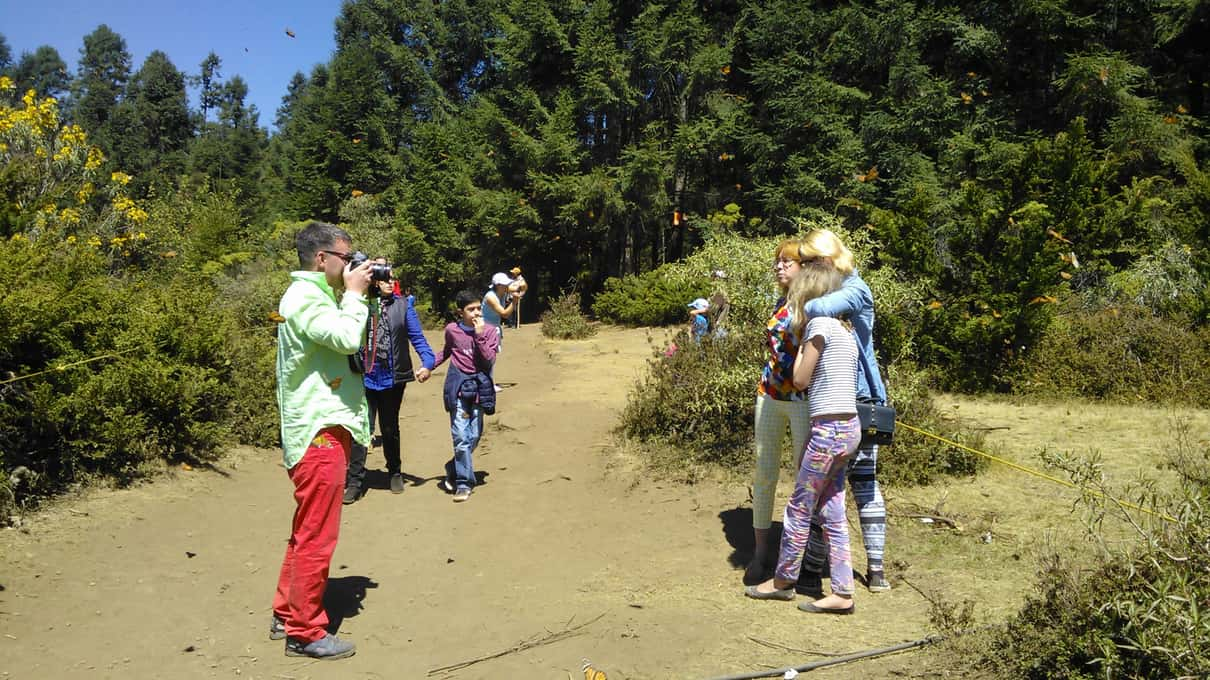
Wear socks that you have walked in before, and bring a spare pair if your tour returns late. Dust gets everywhere, so dark or old clothes are a sensible choice.
Sun, rain and the high-altitude light
The sun at 3,000 m burns faster than it does at sea level, even on a cool day. Bring a hat with a brim, sunglasses and sunscreen, and put the cream on before you start walking.
Toward the end of the season, rain becomes more likely. A light rain jacket or a poncho folds small and keeps the fleece dry. Our guide to the best time to visit explains how the weather shifts through the winter.
Colorful clothes and the butterflies
Alfredo Tour Guide's listing suggests wearing colorful clothes, because a butterfly may land on you. It happens, especially on warmer afternoons when the air is full of them.
If one does, stay still and let it leave in its own time. Never try to touch, catch or attract the butterflies. The rules guides ask visitors to follow are in our page on behaving in the colony.
What goes in your daypack
A small backpack with both shoulder straps leaves your hands free on the steps. Keep it light, since you carry it the whole way up and back.
- Cash in pesos, in small notes, for entrance fees, food, a walking stick or a horse
- A refillable bottle of water, since the climb at altitude dries you out
- Snacks for the long drive and the walk
- A camera or phone with the flash switched off
- Tissues and hand sanitizer for the toilets at the gate
- The layers you take off on the way up
Cash matters most on the cheaper days. Michoacán Mágico Tours, from ~$108, leaves the El Rosario entrance off the price, about 150 pesos per the listing, so you pay it in cash at the gate along with any food.
The cost guide lists what each tour leaves for you to pay on the day, from tips to a meal at the stalls.
Dressing for a long coach day
The Mexitours coach day from ~$91 is the longest here, 14–15.5 hours from Mexico City. After Piedra Herrada it stops at the Velo de Novia waterfall and in the lakeside town of Valle de Bravo.
The forest in the morning and the town in the afternoon call for different clothes, so layers pay off twice. The sanctuary entrance is not included, about 13 US dollars in cash per the listing.
Piedra Herrada on a budget from Mexico City
Mexitours fits the sanctuary, a waterfall and Valle de Bravo into one day by coach. It is the cheapest option here, but groups reach 50 and its scores are the lowest we list.
On any day trip, leave a dry top and clean socks in the van for the drive home. If you plan to stay near the forest for longer, our guide to multi-day stays covers the week-long option.