Staying near the monarch sanctuaries
A day trip gives you one morning at one colony, and the weather decides what that morning looks like. Sleeping near the forests buys early starts, a second chance and often a second sanctuary. Below, the week-long tour we compare and the do-it-yourself version.
Why sleep near the forests
Every day tour spends hours on the road before the first butterfly. Stay close and that time goes back to you, either as sleep or as an earlier arrival at the gate.
- An early start, ahead of the coaches that arrive from the cities later in the morning
- A second visit if day one is cold and cloudy and the clusters stay closed
- Two sanctuaries on two days, so you see how the forests differ
- A slower pace at altitude, with a rest day if the climb tires you
Weather is the biggest reason. On a cold, grey morning the colonies hang still on the firs, and on a warm, sunny afternoon many take off. A second day doubles your chance of seeing them fly.
EcoColors: a week from Valle de Bravo
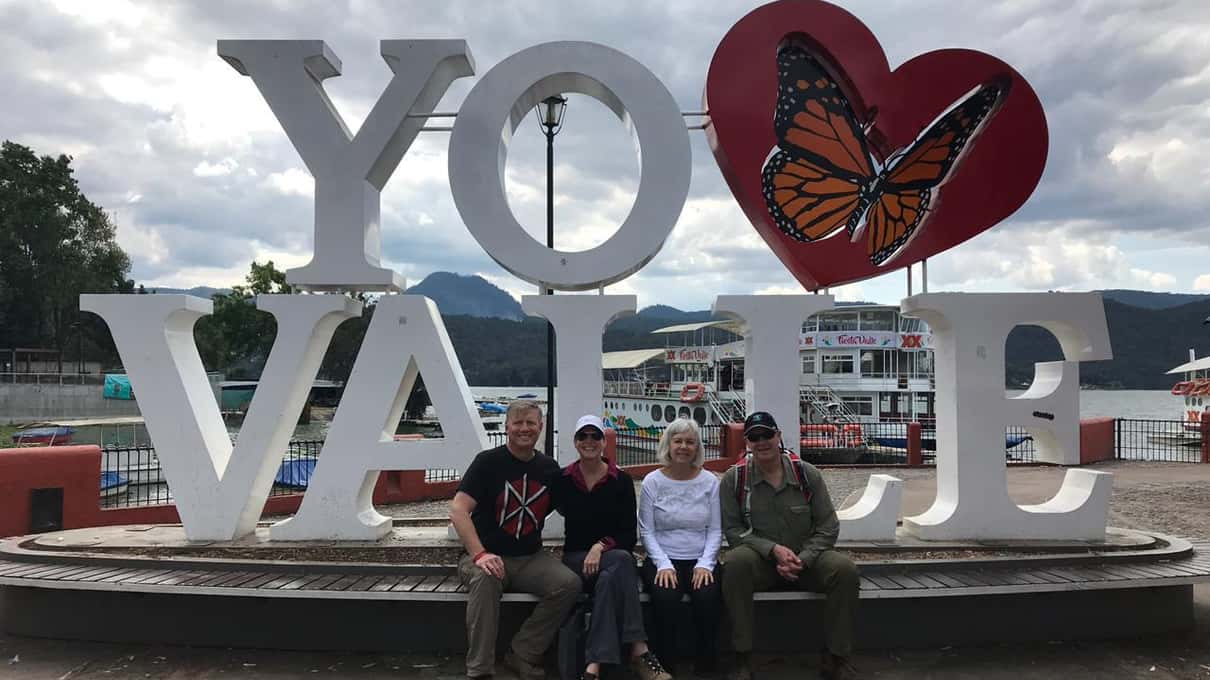
EcoColors' seven-day trip from ~$2,295 is the only multi-day tour we compare. It starts in Mexico City and bases you in Valle de Bravo, a lakeside Pueblo Mágico in the State of Mexico.
From there it visits Piedra Herrada and Capulín, the two sanctuaries on that side of the border. The Viator overview also mentions Aztec history and other wildlife, without giving the details.
The price covers six nights with breakfast, transport, a bilingual guide and the entrance fees. On GetYourGuide the group stays at ten or fewer, and Viator adds pickup from your hotel and the airport.
What the week leaves out
Lunches and dinners are not included, nor are drinks and tips, and your flights to Mexico are your own. Budget for two meals a day for a week on top of ~$2,295.
The reviews are thin, at 4.8 from 13 on Viator and 4.4 from 4 on GetYourGuide. Viator also lists the trip at a higher price than GetYourGuide, so compare both before you book.
Six nights by the lake, two forests
EcoColors' week from Mexico City, based in Valle de Bravo, with breakfast, a bilingual guide and the sanctuary fees in the price.
The other catch is commitment. A week is a large share of most holidays, and if you only want the butterflies, a couple of nights may give you most of the benefit. Our price comparison sets the week against the day tours.
Doing it yourself in Michoacán
For El Rosario and Sierra Chincua, the towns to sleep in are Angangueo and Zitácuaro. Angangueo is a former mining town right below Sierra Chincua and within reach of El Rosario, while Zitácuaro is larger with more places to eat.
Two nights is a sensible minimum. Arrive in the afternoon, visit one sanctuary the next morning and the other the morning after, or repeat the first if the weather was poor.
Getting there and between the sanctuaries is the hard part without a tour. Arrange a licensed driver or local transport through your lodging, travel only by day, and check your government's current advice for Michoacán first; our guide to the starting cities covers this.
Doing it yourself near Valle de Bravo
Valle de Bravo makes the easier independent base. It sits close to Piedra Herrada, has plenty of places to stay and eat, and the drive from Mexico City is shorter than to Michoacán.
A night or two there lets you reach Piedra Herrada early, before the coach groups. The trail is steep, so read our notes on the climb before you plan two visits in a row.
Mountain mornings can be close to freezing in midwinter, even when midday is warm. Pack layers for an early start, as our clothing guide explains.
Two day tours from one base
A middle path between a day trip and a full week is to sleep in Morelia for three nights and book two separate days out. The Michoacán sanctuaries are closer to Morelia than to the capital, so each day out stays under ten hours.
Our pick, Alfredo Tour Guide's El Rosario day from ~$179, covers the entrance and keeps the group to 16 or fewer. Keep the second date free and book it once you see the forecast, choosing among the other Morelia days in our cost table.
You lose the dawn start from a mountain town, since every day still opens with a drive. In return you get a comfortable city, plenty of restaurants and someone else at the wheel.
Fitting two sanctuaries into one trip
Comparing forests teaches you how much the colonies differ. A sunny day at one and a cold day at another can feel like two separate trips.
The most common pairings are El Rosario with Sierra Chincua from Angangueo, or Piedra Herrada with Capulín from Valle de Bravo. Crossing between the two states adds hours on the road, so pick one side unless you have a week. Our sanctuary comparison covers each forest's trail and crowd.
When to plan the stay
The colonies are usually fullest from late December to February. Avoid Christmas, New Year and long weekends if you can, because lodging near the sanctuaries fills up and the trails get busy.
On a longer stay, put your first sanctuary visit on a weekday morning. The guide to the best time to visit walks through the season from arrival in autumn to departure in March.